

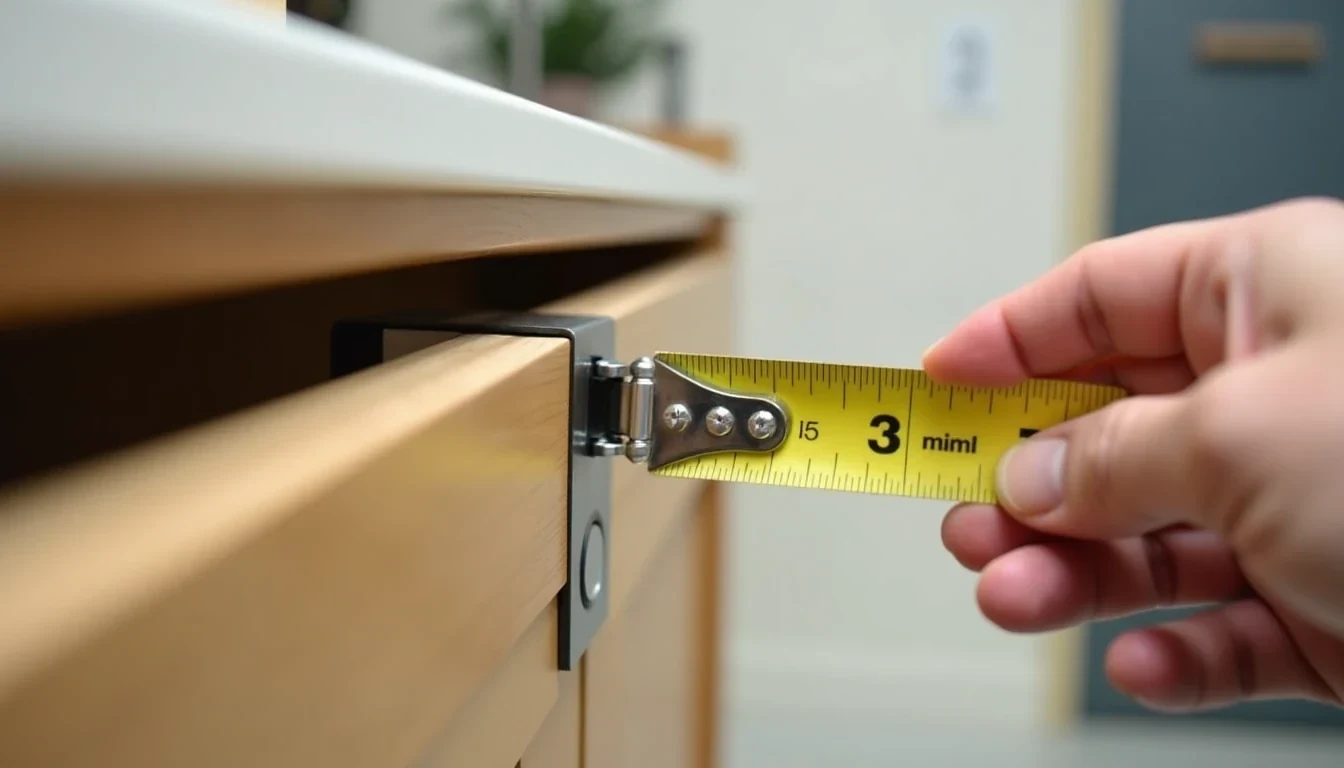
Spend close to five hundred Rand on a Blum Clip Top Blumotion hinge and screw it to a carcass that runs three millimetres out of square across a six hundred millimetre span. The door will still slam and grind against its neighbour. The soft-close damper will sit inside its pressed steel body, hydraulic fluid ready, while the twisted geometry of the box overrides every precision mechanism. You have not bought a soft-close kitchen. You have bought expensive proof that your installer cannot build a square cabinet.
This gap never appears on the quote. Between the product specification and the installation execution sits a silence that swallows entire hardware budgets. A showroom sample works because the sample carcass is machined on a factory line with a CNC bore and a squareness tolerance tighter than a millimetre. Your kitchen was cut on site, or in a back-street workshop, by a router that has not been calibrated in years. The hinge did not change; the box did.
Geometry defeats engineering
Cabinet hardware is sold with numbers that promise certainty. Blum Tandembox runners carry a thirty kilogram load rating. Hettich Quadro soft-close sliders list a hundred thousand cycle life. Aventos lift systems specify precise door height and weight ranges. All of these figures assume the carcass is square, plumb, level, and built from material that can actually hold a screw. Remove that assumption and the numbers become fiction.
A cabinet out of square by more than three millimetres across a six hundred millimetre diagonal forces every moving part into misalignment. Doors bind against frames. Drawers fight their own runners. The soft-close cam on a premium hinge cannot engage because the door sits under constant lateral pressure from a twisted box. The mechanism does not fail; it is held hostage.
Three hinges on a twisted box
To see how this plays out in real Rand, picture a single base cabinet with the same chipboard carcass and deliberate twist. Three sets of hardware are fitted in sequence. First, the budget route: no-name clip-on hinges from Builders Warehouse at roughly eighteen Rand each as of early 2025. These have no soft-close or three-dimensional adjustment. Once the carcass leans, the door sags immediately. The screw holes in the chipboard wallow out within a week. By day ten the door knocks the frame and the homeowner accepts that cheap kitchens feel cheap. The hardware is doing exactly what its price predicted.
Swap in a mid-range Grass or Hettich Sensys hinge at seventy-five Rand per unit, a price tracked across suppliers in the first quarter of this year. The hinge body is better pressed steel. The cup sits deeper. There is perhaps two millimetres of adjustment in and out, up and down. On a square carcass, this is enough. On our twisted box, the adjustment range is eaten entirely by the error. The soft-close works on Tuesday when the humidity is low, then fails on Thursday after a KZN downpour swells the chipboard and shifts the door by another half millimetre. The homeowner now blames the brand. In reality, the hinge is compensating for geometry that sits outside its design tolerance.
Finally, fit the Blum Clip Top Blumotion pair at four hundred and ninety Rand. The oil-damped close is silent in the showroom. On the crooked carcass, the door still closes hard because the Blumotion cam is fighting the preload from a door that is permanently racked. The three-dimensional adjustment offers plus or minus two millimetres, but the carcass error is three. You can hear the metal stress. The homeowner, who specified Blum because the architect insisted, now runs a finger along the catching edge and wonders why they paid five times more for a hinge that performs identically to the no-name unit next door. The answer is simple: it was never the hinge.
The hole in the door matters more than the logo on the box
A thirty-five millimetre hinge cup demands a depth of twelve point five to thirteen millimetres and a setback from the door edge of three to six millimetres for a full overlay. Drill thirteen and a half millimetres deep on a sixteen millimetre door and you blow through the face. Drill eleven millimetres and the cup protrudes, holding the door permanently proud of the carcass. Miss the centre line by two millimetres and the mounting plate sits at an angle that no amount of lateral adjustment can correct. These are not hardware defects; they are geometry crimes committed with a cordless drill.
Screw holding is the other silent killer. Standard wood screws driven into raw chipboard strip out the minute the door weight loads the hinge. The correct fix is a Euro screw or a coarse-thread particle board screw, driven into a properly sized pilot hole. Skip this and the hinge plate rocks in its seat. The door drops. The soft-close mechanism engages at the wrong angle. The homeowner pushes harder. The screw wallows further. Within six months a R500 hinge is hanging by a single fastener that has chewed a crater in the chipboard. You could have fitted a hinge plated in gold, and it would still fall off.
Drawer runners die in parallel
Drawer runners are even less forgiving. A pair of Blum Tandembox sliders is machined to operate on tracks that are parallel within half a millimetre over a five hundred millimetre length. Mount one track three millimetres higher than the other and the drawer tilts. The soft-close piston misfires. The ball bearings grind. A runner rated for thirty kilograms now jams under five kilograms of cutlery because the lateral load has shifted onto the nylon wheels at the front edge. The homeowner describes the drawer as sticky. The fault is a spirit level that was never taken out of the toolbox.
Clearances compound the problem. Standard overlay doors need two millimetres of gap to adjacent doors and frames. An out-of-square carcass steals that gap unevenly. One corner closes to zero millimetres while the opposite corner gapes at four. The soft-close hinge arrives at the shut position and finds the door already wedged against the neighbouring panel. The hydraulic circuit bottoms out. The door rebounds. The user learns to slam it. Two millimetres of missing clearance have converted a precision hinge into a spring-loaded rattle.
What to write on the order sheet
If you are the homeowner signing off on a kitchen for three hundred thousand Rand, do not specify the hinge brand alone. Specify the carcass squareness tolerance. Demand a diagonal variance under two millimetres on every box. Specify Euro screws with a depth stop, not the wood screws left over from the skirting board contract. Specify that drawer runner tracks are laser-leveled, not eyeballed. If you are the contractor, build this into your price. The fifteen minutes spent squaring the carcass on a flat table saves the callback that destroys your margin.
For the renovating homeowner, the test is simple. Before the doors go on, stand back and sight across the face of the cabinet row. Any twist is visible. Open a drawer and listen. A premium runner glides with a low hiss, not a clack or a scrape. Close a door with two fingers. If the box is square, the Blumotion engages three centimetres from the frame and pulls the door silently home. If the box is twisted, the door stops at one centimetre and requires a shove. That shove is your money evaporating.
What to demand on site
Here is the checklist. Carcass diagonal within two millimetres. Hinge cups bored to twelve point five millimetres depth on a registered jig, not by hand. Euro screws, not countersunk wood screws, into pilot holes. Runner tracks leveled to within half a millimetre over their length. Door gaps at two millimetres minimum, checked with a feeler gauge. If your installer dismisses these as unnecessary, you are not looking at a craftsman. You are looking at someone who expects the hardware to do work that the carpentry avoided.
Join the conversation