

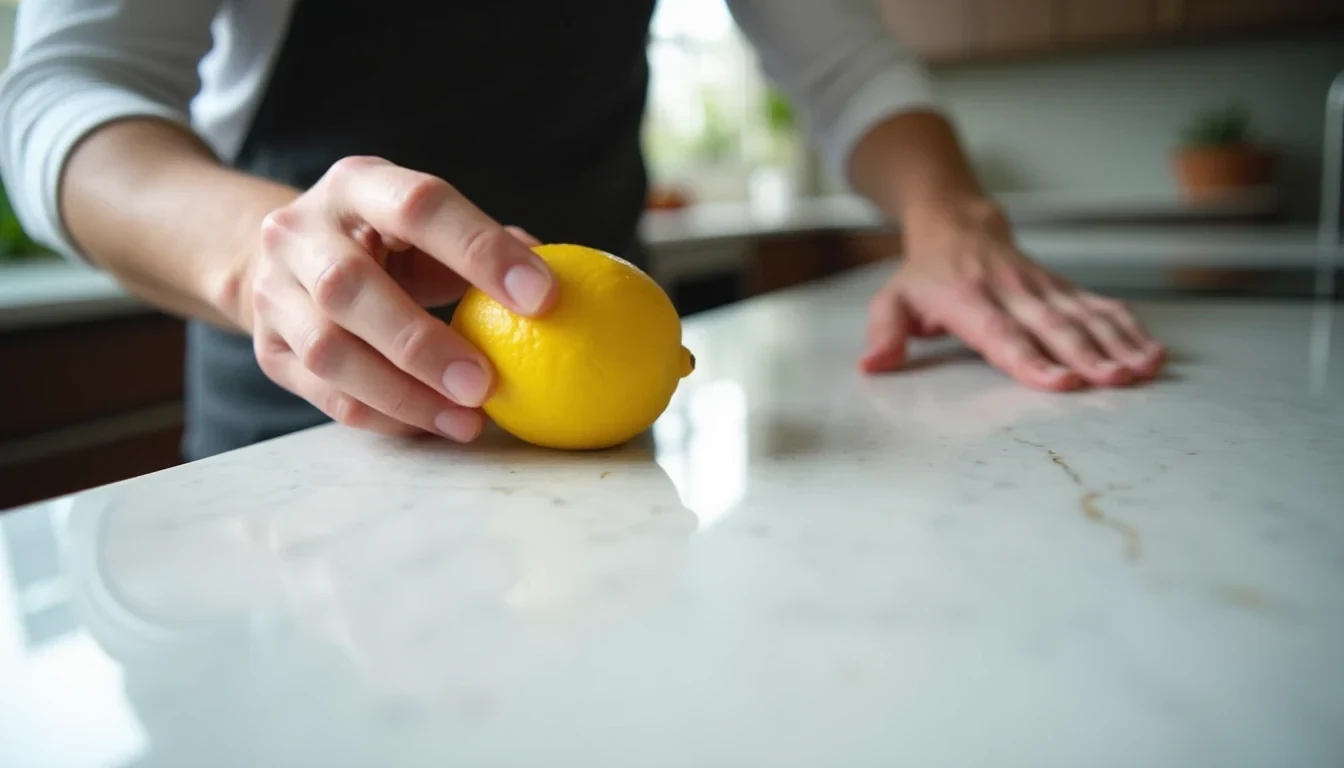
A polished marble slab in a Parkhurst kitchen showroom looks indestructible until a single drop of lemon juice eats a dull patch into its surface in under thirty seconds. That moment separates the buyers who read labels from the ones who understand stone. Natural stone carries geological baggage. Granite, marble, limestone, sandstone, slate, each arrives with its own porosity, hardness, and chemical vulnerabilities that no showroom lighting can disguise. The offcut sitting in your builder’s bakkie is worth more than the glossy brochure; it will tell you exactly what happens when your teenager spills cooking oil across the breakfast counter.
Why Showroom Samples Lie
Stone yards from Randburg to Cape Town’s Paarl move material by the container load, and variation within a single quarry run can be dramatic. A 10 cm square sample clipped from a dense corner of a granite slab may show minimal porosity, while the center of the same slab drinks water like sandstone. The Bushveld Igneous Complex produces African Red granite with quartz and feldspar locked tight, Mohs hardness pushing 7, genuinely resistant to scratching and most acid attack. But three meters down the same bundle, the grain structure loosens. Without testing the actual slabs destined for your project, you are specifying blind.
Marble compounds the risk. Calcium carbonate dominates its composition, and calcium carbonate reacts with acid the way steel reacts with oxygen. Polished marble etches on contact with lemon juice, vinegar, tomato, wine, even some commercial cleaners, regardless of whether a sealer has been applied. The sealer slows water and oil penetration through the pore structure. It does not change the chemistry at the surface. A sealed marble countertop in a Constantia kitchen will still bear permanent dull spots from a single dinner party where someone sliced limes directly on the stone. The protection buyers imagine does not exist.
Limestone and travertine sit even further toward the vulnerable end. High porosity, Mohs hardness of 3 to 4, and the same acid sensitivity as marble make them genuinely demanding materials. Sandstone spans the range depending on its binder. Quartzitic sandstone approaches granite hardness when silica cements the grains. Argillaceous sandstone, clay-bound and softer, absorbs liquids readily and may show calcareous reactivity where limestone fragments appear in the matrix. Slate, metamorphosed and dense, generally resists acids but scratches more easily than its reputation suggests. None of these behaviors are visible in a dry sample under fluorescent lights.
What Sealing Actually Delivers
Penetrating sealers, the fluoropolymer and silane-siloxane products sold under names like Fila Fob Xtreme and Lithofin Stainstop, work by occupying the microscopic channels within the stone. They create hydrophobic surfaces inside the material, not a plastic film on top. Water beads. Oil resists immediate soaking. Red wine puddles long enough to be wiped away before the pigments settle into the pore structure. This is genuine protection, but protection with boundaries.
The limitation is mechanical, not chemical. Sealers do not armor the surface against physical contact. They do not alter the mineral composition. Acid still meets calcium carbonate and produces etching. A sealed marble bathroom vanity in a Durban North home will survive daily water exposure with minimal darkening at the edges. The same vanity will etch where a teenager’s skincare products contain alpha-hydroxy acids. Reapplication becomes part of the maintenance cycle, typically every three to five years in high-traffic residential use, though some manufacturers claim longer intervals for specific formulations. SealGuard Gold Seal advertises up to a decade, but foreman experience in Johannesburg kitchens suggests three years before water stops beading reliably on honed finishes.
Exterior applications add weathering and UV degradation to the calculation. A sandstone cladding panel on a Cape Town facade, sealed to reduce efflorescence and salt absorption, may need earlier reapplication than the product label implies. The sealer helps; it does not transform the stone into something it is not.
The Offcut Test Procedure
Testing offcuts before installation is not a precaution. It is the specification. The process is straightforward and takes forty-eight hours, which is less time than replacing a stained countertop.
Obtain pieces from the actual slabs, not the sample board. Two or three offcuts of roughly 10 cm by 10 cm, clean and unsealed, represent the material honestly. Label them with the slab numbers if your project uses multiple bundles, because natural variation between bundles can exceed variation within one.
Apply the test substances to distinct areas on each offcut. Olive oil or standard cooking oil tests organic staining and grease absorption. Fresh lemon juice tests acid reactivity directly. Red wine tests both pigmentation and the interaction of acid with color compounds. Plain water establishes baseline absorption and darkening behavior. Coffee, vinegar, and any specific household cleaners you use regularly complete the picture if your habits warrant the additional data.
Leave each substance in contact for fifteen minutes initially. Wipe clean with a damp cloth, no scrubbing, no detergent. Examine immediately and again after twenty-four hours. Oil that leaves a dark halo has penetrated. Lemon juice that produces a matte patch has etched. Water that darkens the surface and remains darker after drying indicates porosity higher than expected for the application. Wine that leaves a pink trace after wiping signals pigment absorption that will repeat across your finished installation.
Repeat the test with extended contact times if initial results are ambiguous. A stone that shows no reaction at fifteen minutes but drinks oil overnight is still unsuitable for a kitchen where cooking happens daily. Document with photographs. These images become part of your project file and your warranty discussion if the supplier disputes suitability later.
Matching Stone to Application
The test results inform placement, not just selection. A granite that shows minimal absorption and no acid reaction belongs in the kitchen, the braai area, anywhere spills and heat occur. The same granite, if it tests more porous than expected, still works for a bathroom floor where standing water is brief and acidic contact rare.
Marble that etches aggressively under lemon juice belongs in low-contact applications. A fireplace surround, where visual drama matters and food never appears. A powder room vanity used twice weekly, not the main bathroom where skincare products accumulate. The etching behavior is not a defect to overcome. It is a property to design around.
Limestone and travertine, consistently porous and acid-sensitive, demand the most careful placement. Shower floors in soft water areas, where mineral content will not compound the maintenance burden. Feature walls, not kitchen counters. Exterior paving in covered areas, not pool surrounds where chlorine and acid cleaners circulate.
Slate’s density makes it forgiving in wet areas, but its moderate hardness means kitchen use will show scratching from ceramic plates and knife accidents. The offcut test with water reveals whether a particular batch has unexpected absorption that undermines this advantage.
What to Specify on the Order
Write the test into your procurement. Request offcuts from the specific slabs, not substitute samples. Specify that installation proceeds only after client sign-off on test results. Note the sealer product and application date in your project documentation. No supplier offers a lifetime stain warranty on natural stone, and the absence of that warranty should appear in your client conversation explicitly, not as fine print discovered later.
For builders managing multiple sites, batch consistency matters more than single-project perfection. A granite that tests well from one container may test differently from the next import. Repeat the offcut protocol on each batch, particularly where client expectations have been set by previous installations.
The R800 to R2 500 per square metre that quality natural stone commands in current Johannesburg and Cape Town markets buys material with character and variation. It does not buy immunity from physics. The offcut test is where you discover what you have actually purchased, before the adhesive sets and the first dinner party begins.
Join the conversation