
Grey is not a floor specification. It is what people say when they want a room to read as bare, hard, and honest, then hand the job to the wrong material and act surprised when the surface behaves badly.
A polished slab, a sand-cement screed, a decorative screed, and a microcement system can all land in the same visual territory on a sample board. On site, they are different animals. A structural concrete surface is ground and densified into the finish. A thinner levelling layer makes the real floor usable. A decorative coating stack uses primers and sealers. If you do not name the system, you are not specifying a raw concrete look, you are guessing.
The same look starts from different floors
Polished concrete begins with a slab that can take a cut
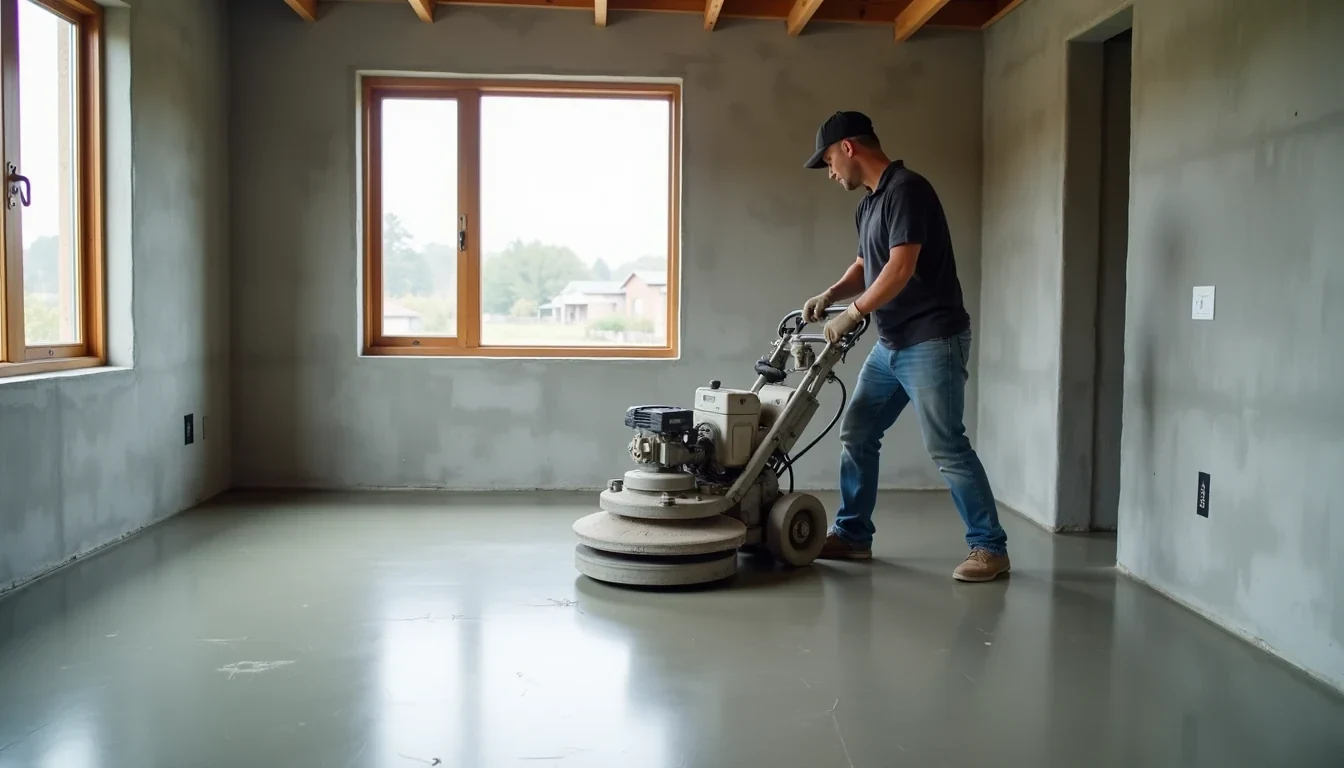
Polished concrete is the structural slab doing double duty. It can be the cast slab itself, or a purpose-built concrete topping. It gets mechanically ground, honed, and sealed until the surface becomes the final finish. The slab needs enough thickness, strength, and flatness to survive that process. A weak pour, a lazy finish, or a badly placed service chase will show up after the first pass of the grinder, not disappear.
On residential work, a true polishable slab is usually far thicker than a screed, often around 100 mm to 150 mm for a ground-bearing slab, with reinforcement or fibre added where the design calls for it. Some engineered toppings can be thinner, but they are still concrete systems, not skim coats. The floor carries the building, then wears the room on top of that.
Screed levels the floor before anything else happens
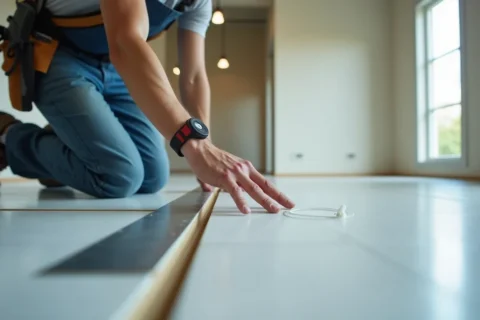
Conventional cement screed is usually a cement and fine sand layer laid over a slab to correct levels, form falls, or provide a base for tile, vinyl, timber, or a coating. Typical bonded screeds sit in the 20 mm to 50 mm range, with thicker builds used where the floor build-up or duty demands it. It is a finishing substrate, not a wear surface by default.
A screed can be perfectly well made and still be the wrong answer for a client who wants exposed stone, grinder marks, or the look of a cast slab. Screed does not contain coarse aggregate in the way a structural concrete mix does, so there is nothing meaningful to reveal by polishing it. You can make it smooth. You cannot make it behave like slab concrete just because it is grey.
Decorative screeds and microcement are their own category
The conversation has moved again when someone says “microcement”. Those systems are thin decorative coatings, usually built up in layers with primers, mesh where needed, colour coats, and a sealer. They can give you a hard, restrained, raw-looking surface, but they are not the same as exposing a concrete slab. Their success depends on installation discipline.
A decorative screed can also be the final surface if it is designed that way, but then the spec has to cover the whole stack, not just the top colour. Primer, bond coat, moisture control, sealer, and traffic expectation all belong in the discussion. Skip them and the pretty grey floor becomes a warranty argument.
The finish you see depends on what lies underneath
Thickness decides what can crack and what can be polished
Polished concrete has body. Screed has less. That is the main divide. A slab or thick topping has enough depth to take grinding and still remain structurally sound. A screed is thinner, so movement in the substrate, poor bonding, or rushed curing will show up faster and louder.
If a homeowner in Sandton wants a lounge that reads like poured stone, the slab has to be planned for that from the pour date. If a contractor in Cape Town is working over a damp ground floor and the brief says “natural concrete look”, the moisture plan matters just as much as the colour. In humid coastal conditions, a thin decorative system without the right primer or sealer can become a maintenance problem before the furniture arrives.
Cracking shows up differently in each system
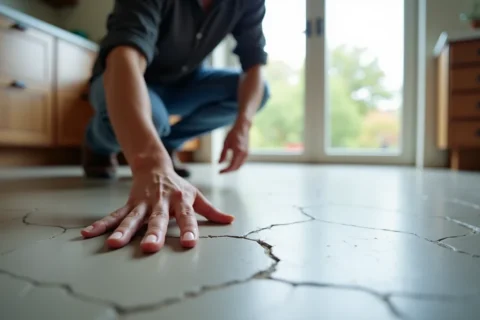
Every concrete-based floor moves. Shrinkage, temperature changes, substrate movement, and service cuts all leave a trace. On polished concrete, old cracks, saw cuts, and patch lines often stay visible. That is part of the language of the floor. They can be filled and softened, but they do not vanish into a perfect white canvas.
On screed, cracking is more unforgiving. A bond failure, a weak mix, or poor curing can leave the surface lifting, dusting, or opening at the joints. If the screed is only a base layer, the crack can be buried under the final finish. If the screed is the final face, the crack is now the design. That is rarely the design anyone actually wanted.
Aggregate exposure and colour variation are not the same thing
Clients often say they want “concrete with some character”. Usually they mean aggregate, movement, and a little variation. Polished concrete can deliver that, but only if the slab mix, the aggregate size, and the grinding depth line up. A light polish gives a salt-and-pepper finish. A deeper cut can reveal larger stone. Push it too far and the floor starts telling you what was really cast under the surface.
Screed cannot offer that same reveal. Any visual movement in a screed floor comes from trowel marks, sand quality, pigment, patching, or sealer sheen. That can still look good, but it is a different aesthetic. The room gets a calm mineral surface, not exposed stone.
The long game is where the wrong spec gets exposed
Repairs and maintenance are not interchangeable
A polished floor is usually densified and sealed, then maintained with neutral cleaners and regular dust removal. It is forgiving in a busy family room, a showroom, or a retail floor, but it is not indestructible. Steel chair legs, dropped tools, and dragged planters will still leave marks. Repairs are possible, but colour matching a patch into polished concrete is an art, not a guarantee.
A screed finish, especially a decorative one, is less tolerant of abuse. If it chips or stains, the repair often shows because the new patch ages differently from the original field. On a base screed that sits under tile, that is a hidden problem. On a screed that is the final finish, it is a visible one.
If you want a floor that can take abuse, polished concrete is the better bet, provided the slab is right. If you want a quiet grey surface and you are happy to protect it, maintain it, and accept some visual variation, a decorative screed or microcement system can work. Confusing the two is how projects spend money twice.
Price is useful, but only if you compare like with like
On 25 August 2026, one South African polished-concrete contractor listed existing concrete polishing from R149.99/m2 and cast-and-polished work from R699.99/m2. At the product level, ABE’s Abescreed SLC P 25 kg was listed at R368.68 at Pinnacle, while Opticote showed Duratop SL Screed at R817.11 for a 25 kg bag. Those numbers do not describe the same thing. One is a floor finish service; the others are bagged levelling systems. The only useful comparison is the one that matches the job you actually need.
What to specify before anyone pours
- State whether the floor is a polished slab, a screed, a decorative screed, or a microcement system.
- Name the target thickness and the acceptable build-up at doors, wet areas, and thresholds.
- Ask for the compressive strength, reinforcement, and joint layout, not just the colour.
- Say how much aggregate exposure you want, from none to full stone reveal.
- Specify the sealer or densifier, plus who is responsible for re-coating later.
- Require moisture testing on ground floors and any slab that has sat wet through winter.
- Confirm the repair expectation, because a patch on polished concrete and a patch on screed do not age the same way.
- If the brief is only “raw concrete look”, stop and define the system first. Grey is a colour. It is not the spec.