

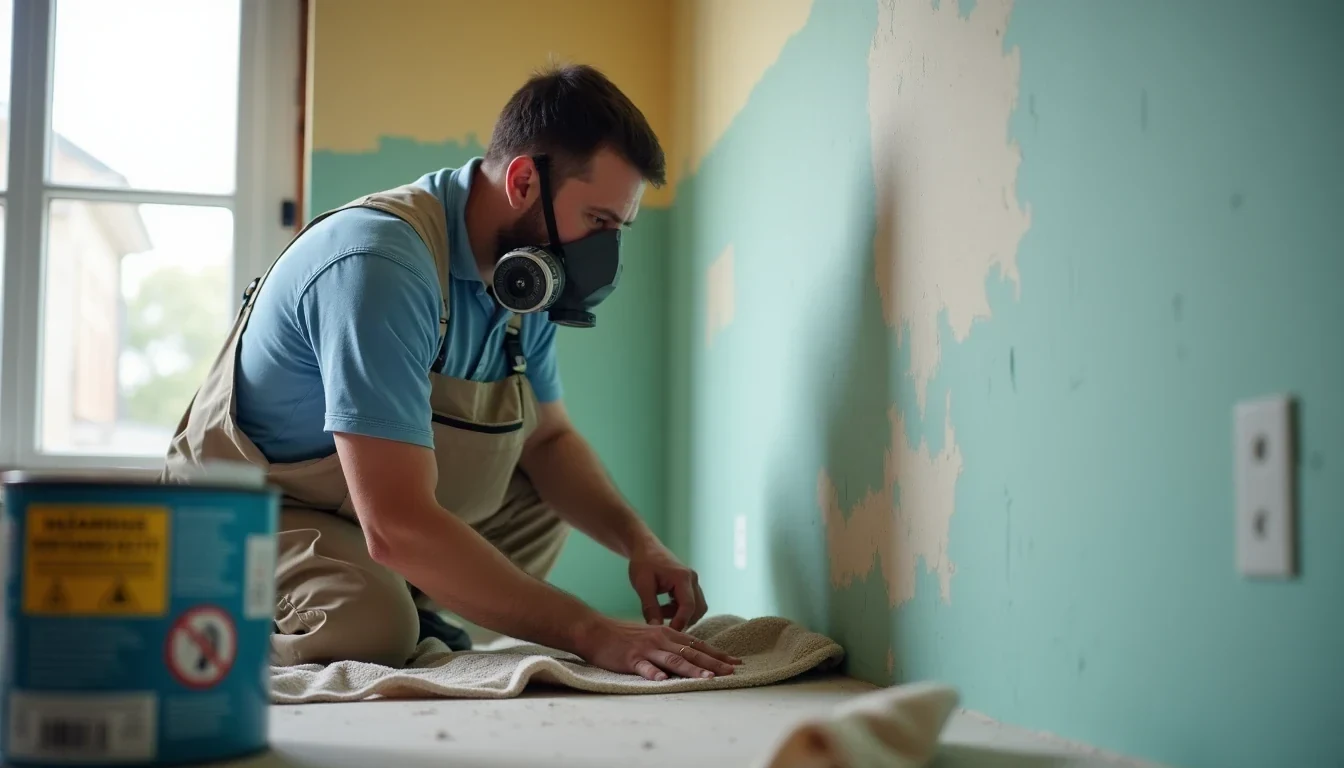
The 90 ppm limit that came into force in March 2024 did not make old paint on your walls any safer; it only made new paint in the tin cleaner. For anyone stripping back layers in a house built before 2009, and especially pre-1980, the hazard sits exactly where it always has: in the dust that rises when someone decides to sand efficiently rather than safely.
The Hazardous Substances Act regulations published in September 2023 and enacted six months later brought South Africa in line with stricter international standards. Manufacturers, importers, and retailers now face penalties for exceeding the 90 parts per million threshold. Labelling requirements have tightened too, with any detectable lead triggering warnings on products destined for children’s toys or furniture. The law’s gaze is forward. It does not reach backward into the existing coatings that contractors and homeowners disturb every day across older suburbs in Johannesburg, Cape Town, and Durban.
Why old paint turns dangerous during renovation
Lead was a standard paint additive for decades, prized for durability and colour fastness. In South Africa, the 600 ppm limit only arrived in 2009. Homes built before that date, and certainly those from the 1970s and earlier, carry a high probability of lead-bearing layers buried under newer coatings. The problem is not the intact surface. Intact lead paint, while not ideal, does not circulate through a home. The danger begins with removal.
Dry sanding, power sanding, scraping, heat guns, and open flame stripping all liberate lead particles into breathable dust. These particles are small enough to evade the body’s natural filters, entering lungs and crossing into the bloodstream. From there, lead accumulates. In children, the effects are neurological and permanent: reduced IQ, behavioural disorders, developmental delays. In adults, cardiovascular and kidney damage accumulate with repeated exposure. Pregnant women face additional risks of miscarriage and fetal harm.
The efficiency trap catches both DIY renovators and experienced contractors. A random orbital sander strips paint fast. It also fills a room with invisible, toxic dust that settles into carpets, upholstery, and HVAC systems, re-circulating for months. The tool that saves a day of labour can poison a household for years.
Testing before touching a surface
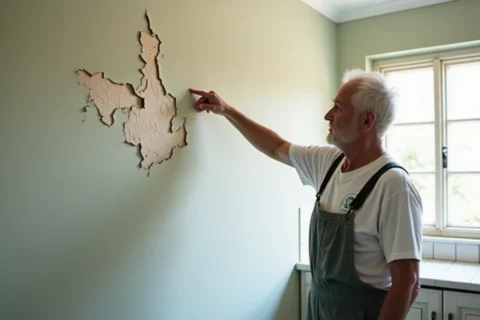
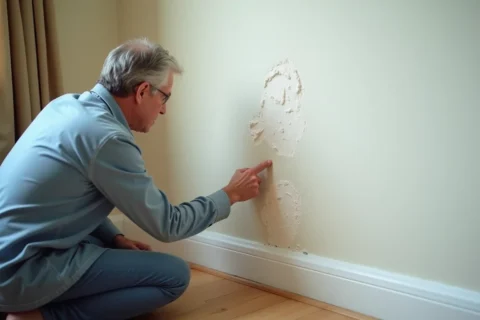
No visual inspection reveals lead content. A wall may show five layers of newer, lead-free paint while concealing a lead-rich base coat. Testing is mandatory before disturbance, and several methods exist with different cost and accuracy profiles.
DIY swab kits, available from Builders Warehouse and hardware retailers, provide initial screening through colour-change chemistry. They are inexpensive and immediate. They are also qualitative, prone to false positives and negatives, and unable to quantify concentration. Use them as a first alert, not a final verdict.
For reliable results, collect paint chip samples from multiple locations: windowsills, doorframes, skirting boards, and any chewable or high-friction surfaces where children might contact the paint. Send these to a SANAS-accredited laboratory for quantitative analysis. This destructive method delivers precise ppm readings and definitive guidance on hazard level.
Professional assessors with handheld X-ray fluorescence (XRF) analysers offer a middle path for larger projects. These devices read through paint layers non-destructively, delivering instant, accurate results without surface damage. For extensive renovations or where children and pregnant women are present, engaging a certified lead risk assessor is the soundest investment.
Containment and dust suppression on site
Once lead is confirmed or suspected, standard construction dust control proves inadequate. Lead particles demand specific, rigorous containment.
Wet methods are the foundation. Wet scraping, wet sanding, and continuous misting keep particles bound to the surface rather than airborne. This slows the work, which is the point.
Isolate the work area with heavy-duty plastic sheeting, minimum 6 mil thickness. Seal doors, windows, and all HVAC vents with plastic and duct tape. Shut down heating and cooling systems entirely during work to prevent circulation of contaminated air through the building. For larger projects, deploy negative air machines with HEPA filtration, creating inward pressure that prevents dust escape.
Cleanup follows a two-stage protocol. HEPA vacuum all surfaces first. Standard vacuum cleaners, even those with conventional filters, re-aerosolize lead particles and worsen contamination. HEPA filtration captures 99.97% of particles at 0.3 microns and above. Follow vacuuming with wet wiping using a lead-specific cleaning solution or trisodium phosphate equivalent. Repeat the entire sequence. Single-pass cleaning leaves residue that continues to hazard occupants.
Protective equipment for workers
Standard construction PPE does not suffice for lead work. Respiratory protection must be fit-tested and rated for lead particulates, typically N100, P100, or FFP3 disposable respirators, or half-face elastomeric respirators with P100 filters for extended use. Paper dust masks are worse than nothing, providing false confidence while permitting full exposure.
Coveralls should be disposable and impermeable, removed before leaving the work area to prevent dust transport. Workers need nitrile gloves, eye protection, and dedicated work boots that remain on site or undergo thorough decontamination. Eating, drinking, and smoking in the work area must be prohibited because hand-to-mouth transfer is a major exposure route.
For homeowners attempting limited work, the same principles apply at reduced scale. The respirator is non-negotiable. The temptation to skip it for a quick afternoon job is precisely where poisoning happens.
Safe disposal of lead-contaminated waste
Paint chips, dust, used filters, disposable coveralls, and cleaning rags constitute hazardous waste. Do not bag them with general construction debris for municipal landfill. Contact your local municipality or a licensed hazardous waste contractor for guidance on approved disposal routes. Document the waste stream. In the event of future contamination concerns, proof of proper disposal protects both health and legal liability.
What to specify for repainting after removal
Once surfaces are stripped, tested clean, and fully decontaminated, specify new coatings that comply with the 2024 regulations. Major South African paint suppliers including Plascon, Dulux, Prominent Paints, Promac, and Wattyl have reformulated ranges to meet the 90 ppm limit. Request written certification of compliance from your supplier, particularly for primers and undercoats where lead historically concentrated.
For high-friction surfaces and children’s rooms, consider specifying products with no detectable lead content at all, below even the 90 ppm threshold. The marginal cost increase buys additional safety margin.
A working checklist for lead-safe repainting
- Confirm construction date of building; pre-2009 demands testing, pre-1980 demands extreme caution
- Test all layers with SANAS lab analysis or certified XRF assessment before disturbance
- Never dry-sand or power-sand unknown or confirmed lead paint
- Erect 6 mil plastic containment barriers; seal HVAC
- Use wet methods exclusively for paint removal
- Deploy HEPA vacuum and two-stage wet cleaning for all decontamination
- Wear fit-tested respirator rated for lead, disposable coveralls, nitrile gloves
- Dispose of all waste through licensed hazardous waste channels
- Specify certified sub-90 ppm replacement coatings with supplier documentation
- Re-test surfaces post-remediation if children or pregnant women will occupy the space
The 2024 regulations are a milestone for new paint manufacturing. They change nothing about the old paint already on South African walls. That paint must be treated as hazardous material, with the protocols and respect that classification demands.
Join the conversation