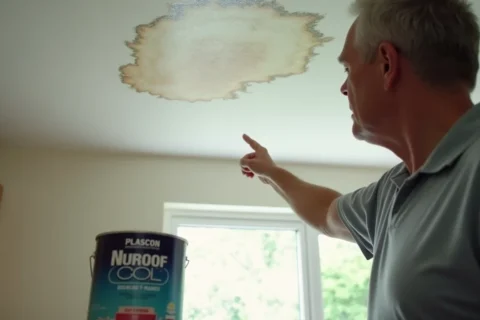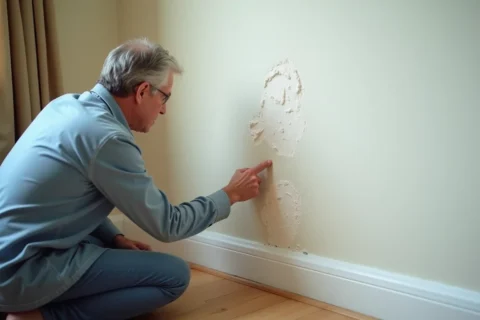

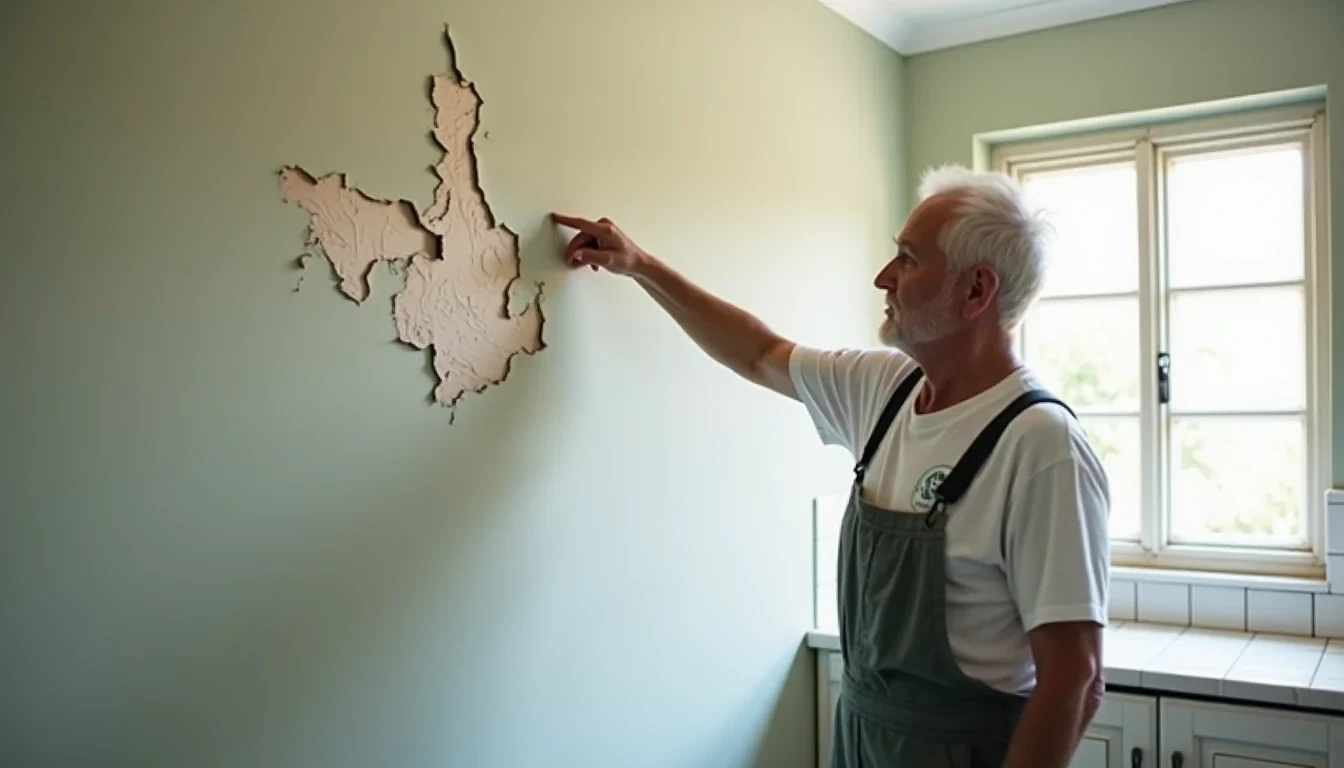
A R12,000 kitchen repaint in Bryanston started peeling at the cornices six months after completion. The contractor had skipped the plaster primer to shave R2,800 off the quote. The homeowner now faces stripping, re-priming, and three fresh coats. This is a common problem when primer gets treated as diluted paint rather than as a purpose-engineered coating with a job to do.
Primer is not paint with extra water. It carries higher resin loads, specific binders, and functional additives that finish paints do not contain. A topcoat provides colour, sheen, and surface protection. A primer creates the conditions for that topcoat to function. Confuse the two, and you are paying premium prices for Plascon or Dulux finishes that have nothing to grip.
Five Surfaces, Two Approaches, One Clear Loser
The test is straightforward: take five surfaces common to South African renovation work, paint half with the correct primer system and half without, then measure what happens after curing. The results are not subtle; they are visible from across a room.
New Plaster and Masonry
Fresh plaster out of the trowel runs at a pH between 11 and 13. Standard acrylic emulsion cannot survive that alkalinity. The chemical reaction, called saponification, turns the paint binder soft and sticky. Within months the surface discolours to a dirty yellow-brown and the film powders off.
The correct system is an alkali-resistant plaster primer. Plascon Plaster Primer, a water-based acrylic at roughly R450 for 5 litres, covers 10 square metres per litre. Dulux Alkali Resistant Primer sits in the same range. Either seals the porosity and creates a pH barrier.
Without it, absorption varies wildly across the wall. Some areas drink the topcoat; others sit glossy on the surface. The result is flashing, a patchy sheen variation that no amount of additional finish coats will correct. A 40-square-metre lounge wall that should have taken 8 litres of topcoat ends up needing 14 litres, and still looks uneven.
Chalking Paint
Old exterior walls in the Highveld sun often chalk. Rub your hand across the surface and it comes away coated in pigment powder. Paint applied directly over this loose layer adheres to the powder, not to the wall beneath.
Dulux Bonding Liquid, a solvent-based alkyd, penetrates and consolidates the chalk. Plascon Masonry Sealer does the same work. Either costs around R380-R520 for 5 litres and converts a failing surface into a stable substrate.
Skip this step and the new paint releases in sheets. The failure looks like peeling sunburn. It starts at edges and stress points, then spreads. On a standard three-bedroom facebrick repaint in Pretoria, the labour to scrape and restart runs R35,000-R48,000. The bonding liquid would have added R1,800.
Ferrous Metal
Mild steel gates, window frames, and security bars dominate South African residential work. Untreated, they begin rusting within weeks of exposure. Red oxide primer contains zinc phosphate or similar inhibiting pigments that create an electrochemical barrier.
Plascon Red Oxide Primer and Prominent Paints Red Oxide Primer both run approximately R280-R350 for 5 litres. Application is thin, at roughly 12-14 square metres per litre. The finish coat goes over this, not over bare metal.
Paint metal directly and rust bleeds through as orange-brown streaking within one rainy season. The metal continues degrading beneath the paint film. By year three, you are not repainting. You are cutting out sections and welding replacements. A standard driveway gate in Johannesburg, properly primed, lasts fifteen years. Unguarded, it needs structural work in five.
New Timber
Pine is cheap, available, and full of tannins. These natural wood extracts migrate through paint films, causing yellow-brown discolouration on light colours. Bare timber also absorbs paint unevenly, creating the same flashing problems seen on unprimed plaster.
Plascon Wood Primer and Dulux Wood Primer, both solvent-based alkyds at R420-R550 for 5 litres, seal the grain and block tannin bleed. They also provide a uniform surface for water-based topcoats to grip.
Without this barrier, a white or pale grey finish on new pine skirting or kitchen cabinetry shows staining within six months. The fix is complete stripping, priming, and repainting. For a standard kitchen with 28 square metres of cabinet face, that is R18,000-R25,000 in labour and materials to correct a R1,200 primer omission.
Previously Glossy Surfaces
Old enamel kitchen cupboards, varnished built-in wardrobes, and melamine office furniture present a slick, non-porous surface. New paint has nothing to bite into. The industry term is “poor key.”
Plascon Universal Undercoat, a solvent-based alkyd, and Dulux Supergrip Primer, a water-based acrylic, are formulated to bond to these surfaces. Universal Undercoat runs R480-R560 for 5 litres. Supergrip Primer is slightly higher at R520-R600. Both create a microscopic mechanical bond that holds the finish coat in place.
Apply finish directly and the paint releases in flexible sheets, often pulling away cleanly with masking tape. The failure is sudden and complete rather than gradual. A melamine kitchen respray in Cape Town, done without adhesion primer, required full stripping and restart at R32,000. The Supergrip would have added R2,400 and two days to the original schedule.
What the Numbers Actually Say
Material costs for primer are consistent across the major South African suppliers. A 5-litre can of purpose-specific primer ranges from R280 for basic red oxide to R600 for high-performance adhesion primers. Coverage runs 10-14 square metres per litre depending on surface porosity. For a 100-square-metre project, primer materials add R2,500-R4,000.
Labour for primer application is typically bundled with the painting contract at R15-R25 per square metre, or roughly R1,500-R2,500 for that same 100 square metres. Total primer investment: R4,000-R6,500.
The cost of failure follows a different curve. Stripping failed paint runs R30-R70 per square metre. Surface re-preparation adds R10-R20. Correct primer application, now mandatory, adds the R4,000-R6,500 you should have spent initially. Two finish coats at R20-R40 materials and R30-R50 labour per square metre add another R5,000-R9,000. Total rectification: R10,000-R20,000 for the same 100 square metres, excluding the original failed work.
The contractor who skips primer saves one line on the quotation. The homeowner who accepts that saving inherits a liability that multiplies fivefold.
How to Specify on the Order
For builders and finishing contractors, the specification sheet is where this gets enforced. Vague language invites corner-cutting.
New plaster: Specify “alkali-resistant plaster primer, Plascon or Dulux equivalent, applied to manufacturers’ coverage rates after 28-day cure minimum.”
Chalking surfaces: Specify “consolidating bonding primer, Dulux Bonding Liquid or Plascon Masonry Sealer, applied to chalking substrate until absorption ceases.”
Ferrous metal: Specify “red oxide metal primer with zinc phosphate inhibition, Plascon or Prominent Paints, two thin coats at 12m²/L.”
New timber: Specify “solvent-based wood primer, tannin-blocking grade, Plascon Wood Primer or Dulux equivalent, sanded between coats.”
Glossy existing surfaces: Specify “adhesion-promoting undercoat, Plascon Universal Undercoat or Dulux Supergrip, applied to degreased and lightly abraded surface.”
Include the product name, the function, and the coverage rate. A specification that reads “apply primer as necessary” will be ignored.
The Verdict
Primer is not a negotiable extra. It is a material with a technical function that no finish coat can replicate. The five surface tests make this visible in different ways: alkalinity destroys, porosity varies, metal corrodes, timber bleeds, and gloss repels. Each failure has its own signature, timeline, and rectification cost.
The R2,800 saved on that Bryanston kitchen cornice bought a R12,000 problem. The mathematics are not complicated. They are simply ignored until the peeling starts.