
Porcelain gets treated like the answer to everything because it is the harder, denser tile. That thinking empties budgets fast. A shower wall does not need the same tile spec as a mall foyer, a hotel lobby, or an exterior terrace that bakes in the sun and takes weather abuse.
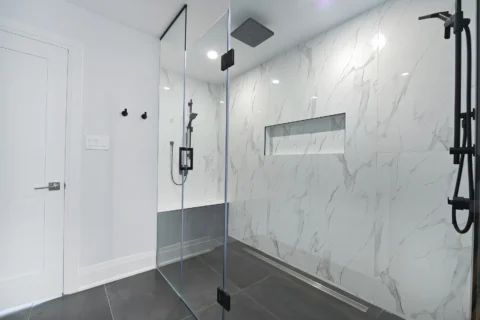
For an interior shower surround, the waterproofing layer behind the tile does the real work. The tile on top finishes, protects, and cleans up well. If the wall tile is a properly chosen glazed ceramic, you have not compromised the shower. You have simply stopped paying for a floor-grade body where a wall-grade product would do the job.
Porcelain and ceramic are not the same thing
The word porcelain sounds stronger, so people assume it is always the better buy. That is lazy specification. Porcelain and ceramic are related, but they are not interchangeable.
Porcelain is made from a finer, more tightly controlled clay mix and fired hotter until the body becomes very dense. This means low water absorption, high strength, and better resistance to wear. A porcelain tile that meets the BIa classification under ISO 10545-3 absorbs less than 0.5 percent water.
Ceramic wall tiles are usually made from coarser clay and fired at lower temperatures. They are lighter, easier to cut, and often absorb far more water, especially in the wall-tile categories that sit above 10 percent absorption. This sounds alarming only until you remember the wall behind the tile should already be waterproofed.
A shower wall does not need a tile body that can survive a driveway or an airport terminal. It needs a tile that sticks properly, cuts cleanly, takes grout well, and cleans without drama. Ceramic does that all day.
Where porcelain earns its keep
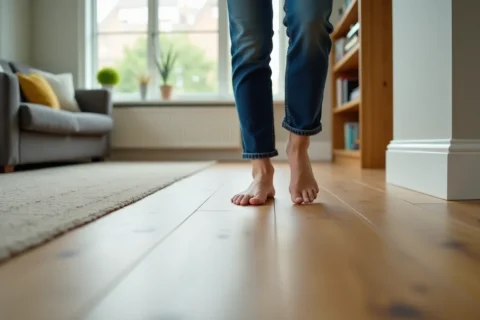
Porcelain is the right call when the tile itself is doing hard work. High-traffic floors, exterior areas, and spaces exposed to moisture plus abrasion all justify the upgrade. If you are tiling a stoep in the Cape, a balcony in Durban humidity, or a family passage that gets hammered every day, porcelain makes sense.
It also makes sense when you want the same tile across floor and wall, or when the finish is part of a heavier duty build-up. Large-format floor tiles, rectified edges, and exterior applications usually sit more comfortably in porcelain territory.
That is a very different question from a shower wall. A wall is vertical, not load-bearing in the same way a floor is. It gets splashed, not ground down. In that setting, porcelain’s extra density is mostly unused capacity, and unused capacity is expensive.
Shower walls do not need floor-grade specs
The most common mistake is to specify the tile for the worst theoretical abuse instead of the actual job. Homeowners end up paying porcelain prices for a wall that never needed them.
In a shower, the waterproofing membrane and the substrate keep water out of the structure. The tile is the visible skin. If the membrane is poor, even a premium tile will not rescue the build. If the membrane is done properly, a ceramic wall tile is perfectly normal.
Glazed ceramic wall tiles are standard practice for shower surrounds. They are light enough to handle easily, they put less strain on the wall, and they are far easier to cut around mixers, shower heads, niches, and pipe penetrations. On a normal bathroom refurbishment, this saves labour and reduces breakage. Fewer chipped edges also means fewer callbacks.
The porcelain-first habit often comes from showroom logic, not site logic. A showroom sells the idea of durability. A site has to deal with corners, returns, cut edges, and a chippy apprentice holding a wet saw at 6pm. Ceramic is usually the more practical wall product.
Cutting and drilling are where the bill starts climbing
Porcelain costs more to buy, but the hidden cost shows up in the install.
Ceramic wall tiles are softer, so a decent manual cutter or a standard wet saw will handle much of the work. Porcelain needs better blades, slower cutting, and more patience. It is denser, so every cut takes more effort and wears tools faster.
Drilling follows the same pattern. Ceramic can usually be drilled with ordinary tile bits if the setter knows what he is doing. Porcelain calls for diamond-tipped core bits, slower speed, water cooling, and a steadier hand. That means more time, more consumables, and more room for error.
Weight also matters. Porcelain tends to be heavier per square metre, which is fine on a floor but a nuisance on walls and ceilings where handling is already awkward. Add a large-format tile to a shower niche or a feature wall and the job gets less forgiving very quickly.
The homebuyer who thinks porcelain is simply “better” is often paying for extra effort on site without getting any visible benefit in the room.
Adhesive choice is not optional
Porcelain’s low absorption changes the adhesive you should use. A standard cementitious adhesive that works fine with more porous ceramic wall tiles is not the right answer for a very dense porcelain body.
For porcelain, installers generally move to a high-performance modified adhesive that can handle the non-absorbent tile body and the movement a bathroom structure sees over time. On paper that adds cost. On site it adds confidence. This is another reason porcelain pushes the bill up.
Ceramic wall tiles are easier to bond because the tile body is more forgiving. That does not mean any cheap adhesive will do. It means the spec can stay sensible instead of jumping to a heavier product category for no real gain.
If you are pricing a shower wall, do not compare only tile price per square metre. Compare tile, adhesive, blade wear, drill bits, and labour. Once you do that, porcelain stops looking like a default and starts looking like an elective upgrade.
What ceramic is good for
Ceramic wall tiles are the right choice for more than shower surrounds. Bathroom walls outside the wet zone, kitchen splashbacks, feature walls, guest bathrooms, and decorative cladding in dry interior areas are all good candidates.
A kitchen splashback does not need the same body strength as a patio tile. It needs a surface that wipes clean and looks right. A hallway feature wall does not need frost resistance. It needs manageable weight and a finish that the installer can cut neatly around sockets and corners.
Even some light-use floors can take ceramic if the product is made for that application. A guest bathroom or a bedroom floor can work with a suitable glazed ceramic floor tile in a low wear class, but that is a separate conversation from most living areas. For the main floor, porcelain usually earns its place. For walls, ceramic often does.
What the money difference looks like
The research pack gives a useful South African benchmark from Q2 2024. Entry-level glazed ceramic wall tiles were landing around R120 to R200 per square metre, while basic porcelain started closer to R250 to R400 per square metre. That is before you factor in the stronger adhesive, faster blade wear, and longer cutting time that porcelain brings with it.
On a small shower, that gap can look harmless. On a full bathroom or a repeat housing project, it becomes real money. Builders and contractors see this immediately because it shows up across multiple sites. Homeowners see it when a quote that looked reasonable has quietly grown teeth.
If a tile is going onto an interior shower wall, porcelain is often the expensive answer to the wrong question.
What to specify on the order
If you want to stop the overspend, specify the application, not just the material name.
Ask for the right wall tile
Choose a glazed ceramic wall tile for shower surrounds unless the design genuinely calls for porcelain.
Check the absorption class
Do not buy off the word on the box alone. Ask for the product classification and the intended use.
Match the adhesive
If the tile is porcelain, use the correct modified adhesive. If it is ceramic wall tile, do not let anyone upsell the whole system without reason.
Confirm waterproofing first
The membrane and substrate must be right before anyone starts talking about tile body.
Measure the cuts
A shower with lots of corners, trims, mixer cut-outs, and niches is a labour job as much as a material job. Softer ceramic usually makes more sense.
Separate wall logic from floor logic
A tile that belongs on a floor does not automatically belong on a wall, and a wall tile does not need floor-grade toughness just because the word porcelain sounds safer.
Tile Africa, Italtile, CTM, Stiles, Tiletoria, Builders Warehouse, and Cashbuild all carry wall and floor products that sit in different performance bands. The trick is not finding the most expensive thing in the aisle. It is matching the tile to the actual load, the actual moisture exposure, and the actual job.