
Wood-look porcelain tile is the floor people choose when they want timber behavior without timber problems. It shrugs off wet paws, muddy shoes, chair legs, and the odd spill that sits too long. It does not offer warmth, softness, or a room that avoids sounding like a corridor.
Engineered timber makes the opposite deal. It gives you real wood, a quieter room, and a surface that feels better barefoot on a winter morning. It also asks for discipline. Water, sun, heat, and careless cleaning all leave a mark sooner or later. If you are choosing for a living area, the right answer is not the prettier sample board. It is the compromise you can live with every day.
The same room, two very different outcomes
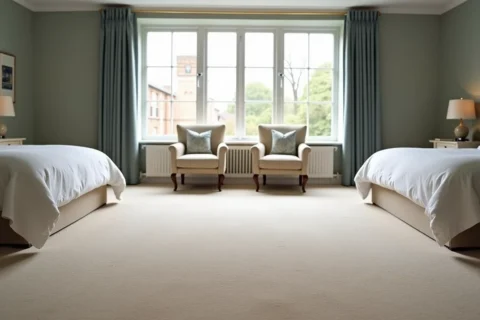
Put wood-look porcelain and engineered timber into the same open-plan lounge and the difference shows up before the furniture is even moved back in.
Porcelain, especially the long plank formats from ranges like Italtile’s Oakland Wood at around R259 per m² or Blaze Natural at R549 per m², gives the room a clean, hard, exact finish. The plank pattern can look convincing from standing height, but the floor still behaves like tile. It feels cool, reflects sound, and asks very little of the owner.
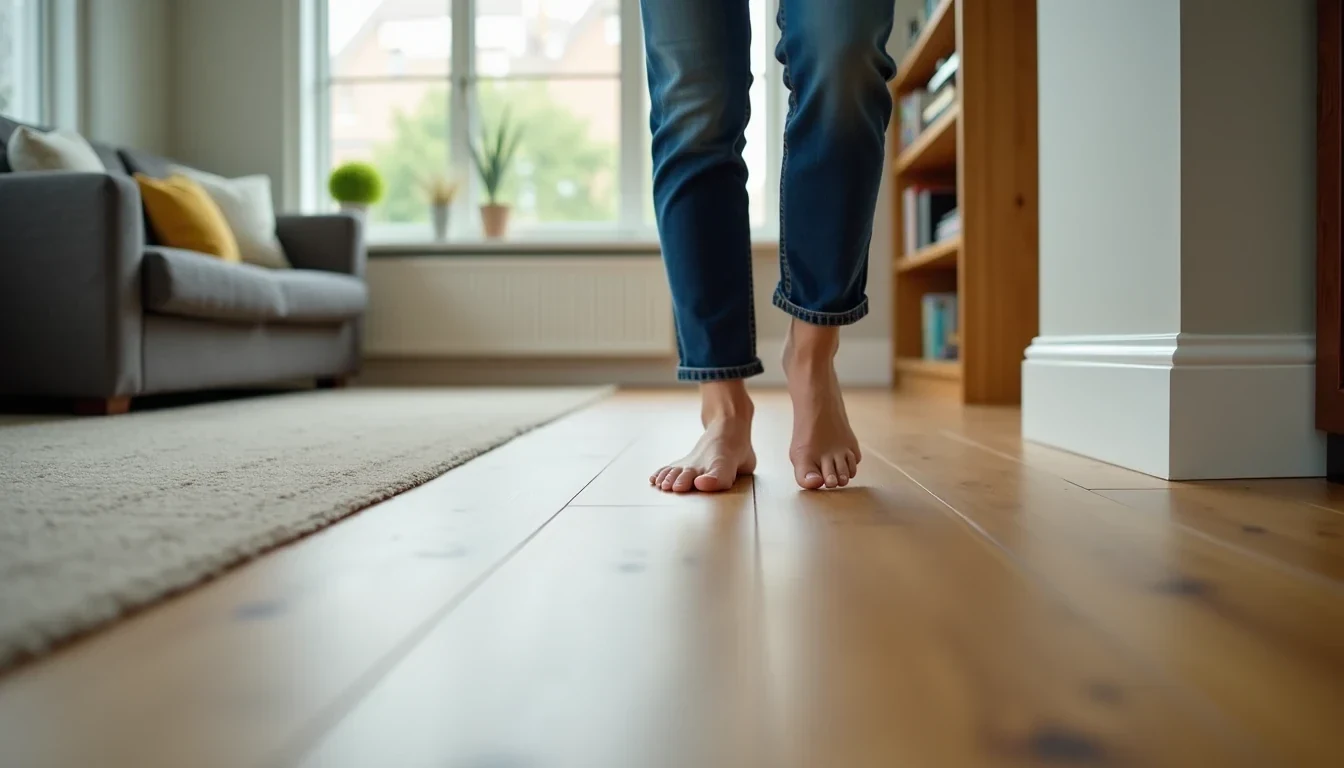
Engineered timber, with options such as FinOak from about R819.38 per m² or premium oak products closer to R1,078 to R1,714 per m², changes the room more than the sample suggests. The floor feels warmer because it is wood on top, not a print on fired clay. It has a small amount of give. Stand on it long enough and that slight resilience is the whole argument.
Porcelain wins on abuse. Timber wins on comfort.
Where porcelain makes sense
A wood-look porcelain floor earns its keep in homes where the living area is also a traffic lane.
Kids with scooters. A Labrador that comes in wet from the garden. Guests who track in gravel. A sliding door that stays open through summer and invites dust, rain, and the occasional dropped glass. Porcelain handles all of that without sulking.
Its strongest advantage is water resistance. The tile body is vitrified and absorbs almost nothing, so spills do not swell the floor, and damp mop water does not become a maintenance event. This means fewer panic wipes and fewer conversations about whether a stain has become permanent.
It also takes scratches better than timber. A moving dining chair will mark a soft wood floor far more readily than a good porcelain tile. Pets are the same story. Claws that would leave little white scars on timber usually do nothing to the tile surface.
Underfloor heating is another porcelain advantage. If the living room has UFH, porcelain transfers heat efficiently and gives a more responsive feel under a heating cycle. You get the warmth through the floor without fighting the floor material itself.
Where porcelain annoys you
The floor does not stop being a tile because it looks like oak.
This becomes obvious when the room is quiet. Porcelain throws sound back at you. Footsteps ring harder. Chairs sound sharper. In an open-plan living area, that hard surface can make the room feel busy even when nothing much is happening. Put a few hard surfaces together—glass, plaster, tile—and the room gets lively in the wrong way.
It also stays cool. In Durban or on a warm summer afternoon that is a benefit. In a Highveld winter, especially first thing in the morning, it is a reminder that the floor is not doing you any favors. The heating can solve some of it, but the base material remains cold and dense.
Then there is the visual issue. Good wood-look porcelain has come a long way, but it still has repeating print faces and grout lines. Real timber boards do not repeat in that obvious way. The eye catches the pattern if the room is large enough or the lighting is unforgiving. If you want the floor to disappear into the background, porcelain can do that. If you want it to behave exactly like wood, it will not.
Where engineered timber earns its price
Engineered timber is the floor for people who value how a room feels more than how invincible it is.
The warmth is real. So is the quieter acoustic. Timber absorbs some of the room’s energy instead of bouncing it straight back. Conversations are easier. Footsteps are softer. The space feels more settled, especially in a smaller living area where echo can turn a stylish room into a tin drum.
It is also repairable in a way porcelain never will be. If the wear layer is thick enough, a properly made engineered timber floor can be sanded and refinished more than once. A 4mm wear layer can usually be resurfaced several times over its life, which is why a decent engineered timber floor can stay in service for decades. A damaged board can be replaced. A tired finish can be renewed.
This is a serious advantage in a home that is expected to age gracefully. You are not locked into the first finish forever.
Where timber starts asking questions
Timber is far less relaxed about the environment around it.
Moisture is the obvious problem. A spill wiped immediately is one thing. Water left to sit is another. Once the veneer swells, cups, or starts to lift, the repair gets more expensive and more annoying. A burst appliance nearby, a slow leak at a sliding door, or heavy wet-mopping can all do damage that porcelain would ignore.
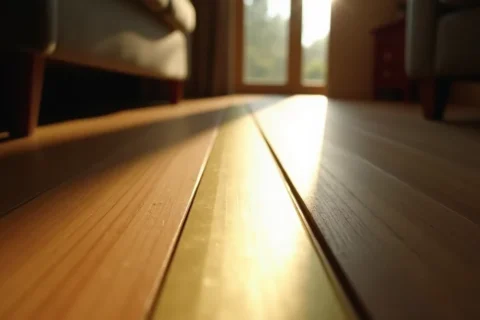
Sunlight is another quiet threat. Timber changes tone over time. Some of that aging is part of the appeal, but if the room gets strong afternoon sun through big windows, you need to accept that the floor will not stay exactly the color it was on day one.
Then there is underfloor heating. Engineered timber can work with UFH, but it wants tighter control. Most suppliers limit the surface temperature to about 27 to 28 degrees Celsius. This is not a suggestion to be ignored. If the floor is floated or heated too aggressively, movement and delamination become a real risk. For UFH, a glued-down installation is usually the safer call.
Pets change the answer fast
Pets test the theory.
If you have dogs that rush through the house after rain, porcelain is the easy choice. It resists claws, wet paws, and the dirt that comes with both. The trade-off is grip. On a very smooth tile, some pets will skid, especially at speed.
Engineered timber gives better traction, but the claws leave more evidence. On softer species or softer finishes, this is not hypothetical; it is the first year of ownership. Add a dog that drags a water bowl or a cat that sprints across the same corner every day, and the surface starts telling the truth.
For a pet-heavy household, porcelain is usually the cleaner compromise. For a quieter home with one or two well-behaved animals, timber remains defensible if the owner accepts the maintenance.
What I would specify
For a living area where practicality dominates, I would specify wood-look porcelain with enough tone variation to avoid the flat showroom look, then make peace with the hard, cool, echo-prone surface. I would choose a reputable rectified range, such as Oakland Wood or Versat-style formats, and budget for proper grout joints, a competent setter, and floor rugs where comfort matters.
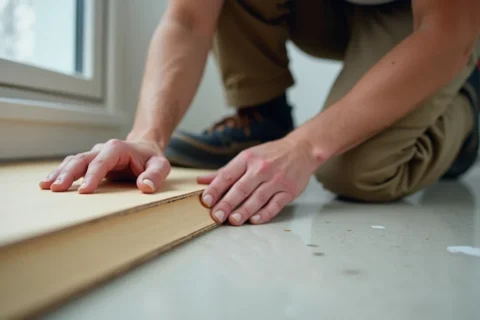
For a living area where comfort is the point and the owner will look after the floor, I would specify engineered oak with a wear layer thick enough to justify refinishing later. I would insist on moisture discipline, the right underlay or adhesive system, and a realistic plan for UFH if heating is part of the house.
What to specify on the order
- Wood-look porcelain with a matte finish and enough face variation to reduce repetition
- A rectified format if you want tighter joints and a cleaner plank effect
- A tile adhesive and grout system suited to the substrate and the room size
- Rugs or runners if acoustic comfort matters
- Engineered timber with a wear layer thick enough for future sanding
- A glued-down installation if the floor sits over underfloor heating
- A maximum surface temperature limit of 27 to 28 degrees Celsius for timber
- Confirmation of board replacement availability from the same batch
- A moisture control plan for doors, kitchens, and spill-prone zones
- Finish expectations in writing, especially if the room gets strong sun
Wood-look porcelain and engineered timber do not compete on the same terms. One is built for endurance and easy cleaning. The other is built for comfort, repair, and the quiet satisfaction of walking on real wood. Pick the floor that fails in the way you can tolerate, because one of them will fail first, and the room will still need to work on that day.